

RETOURN project: Restoration of tourism after natural disasters
The project aims at the restoration and reconstruction of damaged areas and sectors in the field of tourism affected by the disaster by creating the profile of a new tourism expert with experience in this field. Another goal is to build, implement, test and disseminate the training program “Restoring tourism after natural disasters”, which focuses on tourism disaster management and the restoration of the tourism image after a natural disaster. Its main product is an e-learning course material consisting of five modules, which was developed for the purpose of retraining and further training of tourism professionals and students, so that they can respond to the growing need to revive areas and tourist destinations affected by natural disasters. The purpose of the RETOURN course is to enrich the knowledge and skills of tourism professionals, employees, entrepreneurs, tour organizers and managers, tour guides and tour guides, graduates and university students in the economic and tourism fields.
After registration, the course material is available for free at the following link: https://education.retour.eu/tion.retourn.eu/
PARTNERSHIP
Coordinator:
- Università degli Studi di Macerata (koordinátor)
Partners:
- Univerza V Mariboru
- AKMI
- Associazione Culturale Pepe Lab
- Ellinoitaliko Epimelitirio
- Europe Unlimited e.V.
- Gospodarska Zbornica Slovenije Center Za Poslovno Usposabljanje
- Trebag Szellemi Tulajdon – És Projektmenedzser KFT
- Umbria Chamber Of Commerce

ESTELLA

The Estella project (Environmental Awareness in Schools Through ExperiantiaL LeArning – 2022-1-FR01-KA220-SCH-000087322) is co-funded by the European Union. The project aims to produce a training package based on David Kolb’s theory of experiential learning. Accordingly, personal experience becomes real knowledge in 4 steps: personal experience, reflective observation, theoretical abstraction, active experimentation. This is a way to build not only subject knowledge but also personality. The curriculum addresses the most pressing challenges of environmental protection, giving students a personal experience through active participation and group activities inside and outside school. Its website provides an opportunity to share reflections, further cooperation and international good practices. It also contributes to intercultural knowledge and personal development.
For more information, see the project website: https://www.projectestella.com/index.php/en/
The 3R’s – Reduce, Reuse, Recycle
You can find the results of the project on our website: www.the3rproject.com
Accept the challenge and start the 3Rs: Save, reuse, recycle!
Spotify: The 3R’s – Reduce, Reuse, Recycle
YouTube: @3rproject56 3R Project
In 2020, our international consortium of 6 members won support for the promotion of a waste-free lifestyle from the Erasmus+ grant. Our common goal is to focus attention on environmental issues, to develop and provide the tools and resources necessary for change, and to positively influence people to contribute to a clean, healthy and sustainable environment. The title of the project: “Take the challenge and start the 3R’s: Save, reuse, recycle – Promoting a zero-waste lifestyle among adults” (Take the challenge and start the 3R’s: Reduce, Reuse, Recycle. Promoting zero-waste lifestyle among adults), (number 2020-1-PL01-KA204-081952) The project aims to encourage participation in a zero-waste lifestyle in order to reduce the amount of waste that ends up in landfills. We support local communities to rethink their relationship with resources by helping them with knowledge and tools to promote change more effectively.
Insight to the project results:
- Manual: covers 70 pages in 6 topics and introduces the possibilities of waste reduction
- Educational videos: summarizes the simplest waste reduction options in a short and easy-to-understand manner in the 6 topics of the project
- Podcasts (you can listen to the series on our Spotify list: The 3R’s – Reduce, Reuse, Recycle): we interviewed 6 experts per country in the 6 topics
Our topics, which we cover in the manual and podcasts, as well as in the training videos:
| 1 – Introduction to the concept of zero waste | 2 – Shopping and food | 3 – Beauty care products |
| 4 – Cleaning products | 5 – Energy saving | 6 – Water conservation |
Do you know how much waste you produce?
According to Eurostat, the average European produces half a ton of waste every year, which includes disposable packaging, the cardboard boxes you receive your parcels in, and plastic bottles. Half a ton per year! Waste is a huge problem. It destroys the environment, stays in the ground for centuries and causes the destruction of the oceans. Changing our habits is the least we can do for the Earth. What can we do to produce less waste? How can we shop responsibly so that we also pay attention to our environment and not just to our own needs?
You can find out how in our videos
- how you can reduce the amount of waste in your everyday life.
- how you can reduce your energy consumption and why energy efficiency is so important.
- how to make your own cosmetics, toiletries and cleaning products.
- how we can conserve and secure water resources worldwide.
Spotify: The 3R’s – Reduce, Reuse, Recycle
YouTube: @3rproject56 3R Project
Minecraft simulation game for Car mechanics
Minecraft simulation game for Car mechanics (2020-1-UK01-KA226-VET-094527)
Carcraft project is funded by Erasmus+ and it is an innovative approach to VET education born after experiencing the effects that the COVID pandemic lockdowns had in education, because Europe had to quickly adjust to new educational reality: schools adapted and delivered courses and training remotely (not always successfully), but neither teachers nor students were prepared for the transition.
And thus, Carcraft was born to support VET students continue their education when they cannot attend classes!
The project lasts 24 months and an international partnership is working on its implementation.
During this time, our goal is to develop a high-performing digital education ecosystem by creating digitally competent and confident teachers and education and training staff offering:
- State-of-the-art high-quality learning content
- User-friendly tools and platforms that respect the most strict privacy and ethical standards
More information: https://carcraft-project.eu//
Education in double marginality (EM2)
Education in Double Marginality (EM2) is an international project co-financed by the Erasmus + program of the European Union, the aim of which is to develop the skills of low-educated adults, especially NEET youth, and increase their job opportunities with the help of a community agreement, which is mainly realized by the cooperation of the rural public and private sectors .
Aims of EM2:
- Developing the skills of low-skilled adults through informal and non-formal education through a community agreement
- The development of the learning community network based on the general community agreement established for the purpose of training people with difficulties by bringing together schools, associations, municipalities and companies
- Increasing general social awareness of the utility of community agreement and workplace orientation
2 organizations each from 4 countries participate in the project (Hungary, Italy, Latvia, Slovenia). Hungary is represented by Trebag Kft and the Chamber of Plant Protection.
Project number: 2018-1-IT02-KA204-048285
Hírlevelek
SCHOOL INNOVATION LABS (SiLab)
Creativity and innovation have been in the forefront of EU educational policies the last years (ET2020). Nonetheless, conventional ways of teaching related to teacher-centred methods, frontal teaching and chalk and talk still prevail in a good majority of schools, thus “killing” creativity and innovation in the educational context. The SiLab project aims at improving the employability of students through the development of some of the most valued skills in the labour market, namely innovation, creative thinking and digital skills. It aims to develop the i-lab concept for secondary schools, starting from the concept of i-labs that are already in use for business and scientific purposes.
BUT WHAT IS AN ILAB?
An i-lab (innovation laboratory) is an inspirational innovative facility designed to transport users from their everyday environments into an extraordinary space encouraging creative and innovative thinking as well as collaborative work towards problem solving through a mix of on-purpose environment. The strength of the i-Lab is its proven and unique approach to innovative and creative thinking.
THE SPECIFIC OBJECTIVES OF THE PROJECT ARE:
- To develop the i-lab concept for school education
- To create i-labs at selected schools in the partners countries
- To create on-line software application for the school i-labs
- To develop a guide for school i-labs, targeting managers and facilitators.
- To organise pilot i-lab sessions, evaluate the project products and propose changes and improvements.
- To disseminate the i-lab concept and create a network of i-lab friends on eTwinning platform among European schools
OTHER PROJECT RESULTS:
- Innovation sessions with mixed groups of students from different countries.
- Project blog and social media, with inputs from teachers and students.
- Dissemination activities at national and European level
- Two webinars, addressing other schools and interested teachers.
- Presentation of Schools i-lab concept in Schools Education Gateway and preparation of training material for the teacher’s academy.
- Six multiplier events.
Newsletters
Breed2Lead

Breed2Lead is a European project under Erasmus+ which aims to identify the new characteristics of leadership Europe is in need to adopt in order to stay competitive and meet the challenges of the new economic model.
Website: http://www.breed2lead-project.eu/
IICA-KA1 mobility
The Erasmus+ KA1 program of the European Union offers many opportunities for the further training of teachers and other staff working in the educational institutions of the member states in the form of visits abroad. The teachers and trainers of Trebag Kft. can develop their ICT skills within the framework of the IICA project. The IICA (“ICT supported tools and methods for the integration of disadvantaged citizens through adult education”) project offers further training opportunities to the employees of our institution, which is also active in the integration of disadvantaged citizens (unemployed and elderly). As part of the two-year continuing education program, 2 of our employees participate in a five-day training session in 4 different adult education institutions in 4 countries.
E-Civeles
The goal of the international E-Civeles program is to develop the IT skills of people over 55 and foreign workers and to introduce the history and monuments of the participating cities. The coordinator of the project is the University of Malaga in Spain. The consortium is represented on the Hungarian side by Trebag Kft.
More information about the project: www.e-civeles.eu
MAMIDI
Project “Managing Migration and Diversity through Local Government Capacity Building (acronym MAMIDI)” has been funded with support from the European Commission under the ERASMUS+ Programme. The project started on 1 September 2016 and will end on 31 August 2018. MAMIDI project aims to build capacity of Local Government in order to be better prepared for the changes coming from present challenges of EU, namely migration and diversity.
The capacity is enhanced by two main tools:
• Development of training materials and delivery of training for local government.
• Roadmap for managing migration and diversity for local government.
The project target groups are:
• Municipalities staff
• Staff of budgetary and contributory organizations that are created by Municipalities
• Staff of so called Client Centers
• Staff of District offices of local governments
• Staff of other municipal offices
Other beneficiaries influenced by the project are:
• Academics and students at higher education level
• Practitioners in the area of local/regional development
• Decision makers and policymakers at regional and local levels
• General public
For more information please visit the webpage: www.mamidi.eu
Erasmus+ for Security (E4S)
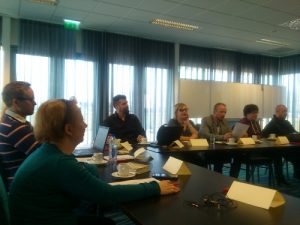
The main aim of the Erasmus+ for Security (E4S) project is to improve safety and security students’ and staff members’ as well as stakeholders dealing with refugees and/or immigrants ability to interact with customers from different cultures.
As a final result of the 2-year work, a training material will be prepared that can be used in middle and higher education, specifically in its security and law enforcement segment, but is also suitable for the realization of NAT’s general citizenship and social studies training goals. The training material also provides help to teachers and trainers in what methods to use if they want to effectively include multiculturalism in the training programs.
Sp4ce

Strategic Partnership for Creativity and Entrepreneurship
Project “Strategic Partnership for Creativity and Entrepreneurship (acronym SP4CE)” has been funded with support from the European Commission under the ERASMUS+ Programme. Project started on 1 September 2014 and will end on 31 August 2017.
Result of the project is designed and developed by the partners innovative common tools for collaboration between students, enterprises and schools (teachers). Those tools will be available as ICT solution with WWW interface designed for use in three main target groups:
- Coaches (enterprises, industry)
- Mentors (vocational school, university, high school)
- Students (vocational school, university, high school)
Project activities concentrate on developing relations between students and enterprises for identification of students’ and enterprises’ needs and supporting their collaboration through mentoring and consulting activities.
iGEN
Interwork betwwen Generation Z and Employers
The project „iGEN – Interwork Between Gen Z and Employers” is implemented in the framework of Erasmus+ VET programme. The subject of the project is cooperation between two main actors on the labour market – members of generation Z and employers. The main goal of our project is to try and close the gap between employers and youth, building up cooperation between the two major players of job markets and creating an effective and successful work environment.
WHY GENERATION Z?
Companies face several challenges due to changes in labour market trends, such as a trend of labour demand exceeding labuor supply in the near future, or the already three different generations (baby boomers, X and Y) present in the labour market augmented with the new generation, so called Gen Z, recently entering the job market with whole new expectations, and so little known about.
The two main target groups of our project therefore are companies who already, or will have gen Z employees, and members of gen Z, with the aim of harmonizing the needs of both sides, and bringing effective solutions to help them be more prepared for the new ways of cooperation.
INTELLECTUAL OUTPUTS
The project will produce several outputs. The first output will be methodology providing methods, tools and best practices for SMEs to create an attractive, supporting and retaining working environment.
The second output will be the Mentor training, developed based on our surveys of European SMEs and demands of Gen Z.
The third output of the project is a soft skill training material produced for members of Gen Z, based on the company survey and further research, prepared in a form adjusted to learning ways of Gen Z. This will help young employees to be more prepared for, and more confident and content at work, more assertive and able to solve problems due to understanding the demands of the job market and the working styles of older generations.
WHAT DO WE HOPE TO ACHIEVE?
Due to and besides these, we expect the employment rate of Gen Z members to increase, the role of SMEs in the labour market and in the local and national industry to grow and the project conception and achievements to reach the decision makers of the educational sector, HR professionals and mentors of the companies, or similar organizations in partner countries. Each result of the project will be disseminated and maintained after end of project development.
REMO
The aim of the REMO project is to support regional exchanges and improve the quality of work mobilities.
The aim of the REMO project is to support regional exchanges and improve the quality of work mobilities. That is why we are creating an online platform and a network where everyone involved in vocational education and training can access information on the subject and connect with others to plan and implement mobilities (be it learning or work). For students, vocational training institutes and the world of work, the online platform will provide an interface where they can plan, organize and use it to conduct vocational training mobilities.
ISO 9001 coherent quality process descriptions will form the basis for the quality implementation of bachelor’s degree mobilities in the REMO project.
More information about the project: http://hu.remoproject.eu/
ECVET goes Business

The aim of the ECVET goes Business project is to develop an approach, with the help of which ECVET, as the European Vocational Education and Training Credit System and other European transparency tools, can be integrated into the general labor processes of companies.
The aim of the ECVET goes Business project is to develop an approach, with the help of which ECVET, as the European Vocational Education and Training Credit System and other European transparency tools, can be integrated into the general labor processes of companies. For this, informative materials and information will be developed that help human resource managers, trade union representatives, and business owners to understand and use them in a language and format that is understandable.
Within the framework of the ECVET goes Business project, a manual is also being prepared, which shows how ECVET and other transparency tools can be applied in everyday human resource management processes. In addition, we organize a two-day training program that prepares users for the practical practical use of ECVET and other transparency tools.
More information on the project website: http://www.ecvetgoesbusiness.eu/
Szigetnyi Tudás
The purpose of the Szigetnyi Tudás online game is to give you a glimpse into the mysteries of the entrepreneurial world, sharing the most important theoretical information and simulating real-life examples and situations; draws attention to the importance of conscious consumer behavior and also entertains
SZITU is the result of more than a year of development work, on which Trebag Kft. 11 development staff, 18 development teachers from 7 schools, an IT team, 2 graphic designers and many volunteers also worked. The project is implemented with the support of the European Union, with the co-financing of the European Social Fund.
On the island, you can compete with your friends to see who owns the most developed part of the island, but for that you have to perform! To buy, you need to collect money, which you can get by answering the game’s tasks correctly. To help you, you can find the necessary information in the Knowledge Base, which hides the background materials. You can test your knowledge in three topics: entrepreneurial skills, agricultural entrepreneurial skills and consumer protection.
The digital learning tool can be found at http://www.szigetnyitudas.hu/, which can be accessed after registration and from there you can test your knowledge in 3 different areas in a playful way.
C4ET-Citizens for energy transition

The goal of the project is to provide high-quality learning opportunities in the field of adult education, which includes the expansion of education and raising the level of service, and to create practices and tools based on modern learning methods in the field of energy management, which increase the knowledge of citizens.
C4ET is a project supported by the Erasmus+ program of the European Union, which is being implemented by a multinational consortium (members of the consortium are delegated from France, Belgium, Croatia, Germany, Italy and Hungary).
The main goal of the project is to increase citizens’ awareness in the field of conscious energy management. To this end, six main topics have been established and a total of 30 tools will be prepared within them, which will help citizens gain deeper knowledge of the given topic, and help them, through good examples, to be aware of energy management in their daily lives.
More information can be found on the project website: www.citizens4energytransition.org
LOQUET – Learning Outcomes in Quality in Education and Training
The LOQUET project aims to fill this gap by transferring good practices from the field of quality management in the businesses to the sector of Vocational Education and Training (VET) in seven countries: Poland, Greece, Cyprus, Sweden, France, Hungary and Germany.
Student With Diploma Shows Graduation and Gold Tick Shows Quality And Excellence Images courtesy of [Stuart Miles] / FreeDigitalPhotos.net
During the last decades the issue of quality management has been applied to almost every sphere of human professional activity, including education. Quality in education and training affects on the one hand the daily operations and efficiency of the organisation and on the other hand the quality of education and learning outcomes achieved. Just like in business, competitive factors in education are becoming increasingly important in the globalising world. However, evidence shows that the significant experience in quality management that is already mature in the business world is often neglected in the educational sector.
Furthermore the LOQUET project aims:
1) to develop a competency profile framework for quality managers in VET institutions, so as to be able to design, implement, evaluate and review effective quality management systems in their institutions;
2) to introduce a comprehensive unit-based training course – expressed in terms of transferrable learning outcomes – for VET quality managers in line with the requirements of the European Quality Assurance Reference Framework Recommendation (EQARF Recommendation);
3) to raise awareness regarding the importance of the EQAVET principles in VET institutions across Europe.
Overall it is expected that in the short term, the project will contribute to the capacity building of quality assurance managers in VET institutions while in the long term it will make a contribution to quality assurance systems in the VET sector across Europe.
For more information, please visit the project website: www.loquet.eu
COACH – Qualitative approach towards practical training in dual vocational training system
The vocational training model works for years in Germany, Austria, Denmark, the Netherlands, Norway and Switzerland generating very low rates of youth unemployment (<10%). Combines 60% subsidized practices (450 € aprox) and supervised by the company with 40% of academic for two years. The employer ensures that the training is optimal and also knows the applicant that in most cases stays with the company after training. So what is the problem?
Coach for the implementation of Dual Training Program
When an SME in our country arises implementation of dual training usually does not have expertise in training, or tools to help them identify practices or how to ensure that the results will meet their needs.
The project objective is to compare how this implementation is done in different countries of the Union and create one best practices guide to help companies plan, execute and measure dual training in their company and how to evaluate their results.
In order to see first-hand experiences in other settings, the project will include visits to workplaces in different countries of the participating companies whose travel and accommodation costs are funded by the EU.
We are currently in the process of identifying companies who wish to participate in the project, which besides having free access to the resulting materials may participate disseminating their success stories.
The project began in October 2012 and ends in July 2014. The introductory meeting was held on the 25th October 2012.
If you wish to attend or need more information, please inform us by email at zsuzsanna.bodi@trebag.hu
Find further information on the project’s website: http://www.dual-trainer.eu
DLC – Directing Life Change

According to researches and employment forecasts, average Europeans change their job activities 3-4 times during their life. Most of them consider this as a threatening necessity and not as an opportunity. Therefore the international consortium DLC project set the aim to develop a guidance to people above 40, providing support to gain those competences needed for the change of life- or professional career. The project closely cooperates with the communities and with those who must implement some changes in their career, through examples, best practices, and conversations with international participants.
We welcome the application of the enquirers, who would like to join the conversation of professional and personal life career changes.
Further information and application:
Enikő Nagy, Gabriella Kengyel
Trebag Kft
eniko.nagy@trebag.hu, gabriella.kengyel@trebag.hu
MPC – MEDIA PLAYING COMMUNITY
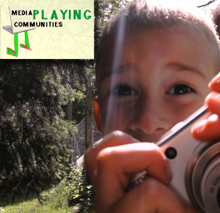
Media – games – community building. These three keywords of the project express the importance of the media studies implemented in early childhood in a playful way, in which the other members of the local communities (kindergarten pedagogues, parents, local, could join. Within the project’s frame the children could walk around their neighbourhood using cameras, and could admire their environment through a new point of view, and could handle and use the video cameras, and could get in contact with Hungarian kids and children from abroad from their age group through online channels.
CTT – Creative Teacher Training
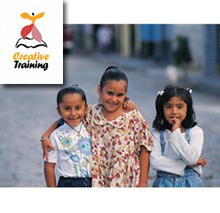
The project invests into inclusive education by targeted innovative and creative teachers training due to the understanding that their role is crucial in attracting and motivating Roma children to participate in school education, to understand the benefits of learning, and to be actively involved in learning activities. For the attainment of efficient learning results, a special attention to child’s personal skills and talents needs to be paid by teachers. For that reason, teachers should take further and continuous training in specific methods of interactive and creative teaching through “learning-by-doing” methods, demonstrations, creative approaches. The project is targeted to trainings of teachers in intercultural skills improvement, understanding the “Other”, discovering the individual skills of learners and application of personalized approaches into the teaching and learning processes
The project invests into inclusive education by targeted innovative and creative teachers training due to the understanding that their role is crucial in attracting and motivating Roma children to participate in school education, to understand the benefits of learning, and to be actively involved in learning activities. For the attainment of efficient learning results, a special attention to child’s personal skills and talents needs to be paid by teachers. For that reason, teachers should take further and continuous training in specific methods of interactive and creative teaching through “learning-by-doing” methods, demonstrations, creative approaches. The project is targeted to trainings of teachers in intercultural skills improvement, understanding the “Other”, discovering the individual skills of learners and application of personalized approaches into the teaching and learning processes
Further information available at: http://create2teach.eu/
FORAGE network

What is ForAge? The project is a European multi-lateral network, the central goal of which is to support lifelong learning for older people and share experiences, in order to create higher standards throughout Europe. Since 1993, the First European Year of Solidarity between Older People and Generations, there have been many changes, project implementations, education, training, seminars, programs and networks related to lifelong learning across Europe. The numbers have grown significantly thanks to the Grundtvig programme, which provides impetus and financial support for imaginative and innovative work across Europe. ForAge is designed to enable wider and better use of this wealth of experience, build on it to share information, analyze and assess its value and impact on education and aging agencies, disseminate research evidence, and to do all this, we create networks. The goal is to create an internet-based database where already implemented good practices, projects, statistics and learning opportunities will be available to elders, educators, project planners, policy makers and foundations involved in the topic.
The ForAge website and database
The ForAge web portal offers all interested parties structured information about the current levels of knowledge, perception and understanding of problems and solutions related to later-age learning. The website also aims to raise awareness of these issues, to help convince people of the value of learning later in life and to help older people feel more confident about taking part in learning.
As the target groups of the project are, in addition to the elderly, later-age students, volunteers and organizations, teachers, managers and adult education planners, researchers, trade unions and civil service providers, politicians and decision-makers, on the website the different target groups can find their own color coding in the database section, which is largely helps them find information for them.
The most significant part of the web portal is the database. This includes curated and structured data from a range of sources such as policy papers, research materials, conference papers, specialist publications, useful links, newsletters from other projects and much more. They want to create this part of the web portal in such a way that it will be functional and viable even after the end of the ForAge project.
The communication tools within the ForAge web portal received special attention. One of the features is the ForAge discussion forum, with which the creators intend to support and help communication between all potential users of the website. The forum will be managed by project members within their own countries. Another special feature is the search module, with which both information on and off the website will be available. The purpose of the web portal is also to help manage the project. In the members’ area, there are also tools aimed at structuring and storing project data, documents and the latest information. This area helps to collect information and share it between the different partners of the project.
More information can be found on the project’s official website: www.foragenetwork.eu/hu/
QEDUSEN-Evaluation Toolkit on seniors education to improve their quality of life

Senior education institutions need to apply new methodology specially targeted at their target group 55 + people. A redesign of the methods, strategies and objectives is required in order to maximize the efficiency and impact of the socio-educational actuation offered to the elderly. Therefore, some kind of support is required for the educational institutions. This project offers a guide and an evaluation toolkit that institutions can use to build up or renew their educational offers and methodologies with quality assurance. A Grundtvig multilateral project.
The project focuses on lifelong learning organizations that currently offer courses and activities for senior citizens (people over 55 years old or retired). The main aims of these organizations are usually to improve the skills and knowledge of the learners in subjects like information and communication technologies, economics, history, arts, health, etc. In a broad sense the aims of these institutions are to help seniors integrate in today’s society, to socialize and raise their well-being and quality of life. The concept of “quality of life” is a commonly used term that needs clarification. The first part of the study will offer an analysis to model the impact of education on quality of life and then identifies the best quality of life indicators that can be used to evaluate any educational program. It will also include best practices in order to provide the teachers with new ideas and methods that work well and are commonly used in the European Union.
The future results will be available on the project portal: http://edusenior.uji.es/
A first summary booklet now is ready, which sums up perfectly the upcoming guide book and evaluation toolkit – the two main results of the Edusenior project.
Check out the BOOKLET below.
CLARITY
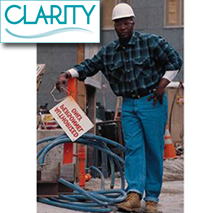
Clarity has created new training materials to support migrant workers in their workplaces. The project supported a small number of migrants to become own-language trainers in basic workplace courses (for example, Food Hygiene). The new trainers are able to deliver training in the required migrant language. The project worked closely with companies, training centres and migrant support groups to achieve the outcomes. A Leonardo Transfer of Innovation project.
More information on the project: http://www.clarity-project.org/Hungary/main.htmll
XPLOIT
The Xploit project aims to build capacity in local communities to develop into learning communities by addressing lifelong learning at a systematic level, exploiting European learning resources and along these processes establish new communication infrastructures in the communities. Communities from Spain (Salt Catalonia), the UK (Swansea), Hungary (Nagykovácsi), Italy (Udine) and Romania (Iasi) are the Xploit practice communities.. The Xploit project participates in open dialogues on learning cities at European and global level. The project directly involves decision-makers at a political level and educational and political partners jointly work together on making sustainable changes in making their city into a learning city.
Please tak a look at the video introducing main aims and results of the project: http://www.youtube.com/watch?v=rT_H7QvtGU0&feature=youtu.be
More information about the project: http://www.xploit-eu.com/
PARENTING
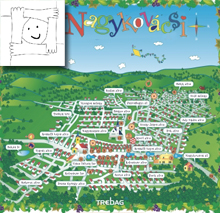
This project focused on adult education for socially excluded and marginalized indigenous citizens, integrated with refugees, asylum seekers, migrant workers and Roma families. The project explored ‘Parenting in Modern Europe’, as a learning theme of common interest across cultures, identifying ways of involving disadvantaged less educationally oriented target groups, promoting social inclusion. Parents new to a city need information about support systems available to them. The project gave Parents’ Groups an opportunity to survey existing policy and provision and prepare City and European Guides for parents and new immigrant families. Equality awareness, especially the fight against racism and xenophobia, were addressed by this project as the process will develop intercultural awareness and support integration.
Parents’ Groups from ten European cities worked transnationally to compare findings, identify themes of common interest and provide feedback about policy and system changes which will be both culturally sensitive and adapted to needs of immigrant and marginalised parents.
This project has been funded with support from the European Commission.
This publication [communication] reflects the views only of the author, and the Commission cannot be held responsible for any use which may be made of the information contained therein.

The project was funded by the European Commission. The views expressed in this publication (Communication) do not necessarily reflect those of the European Commission.


